By Dr. Jordan Kovacs, DC, FPSC
Eatontown Elite Care Center | Published in Auto Injury & Spine Rehabilitation
A motor vehicle collision on Route 35, the Garden State Parkway, or Route 36 can happen in a split second. In the immediate aftermath, adrenaline surges, masking acute physical trauma. Recognizing the subtle signs of whiplash after a car accident is critical because many drivers walk away believing they escaped injury, only to find themselves stiff, foggy, or in severe pain days later.
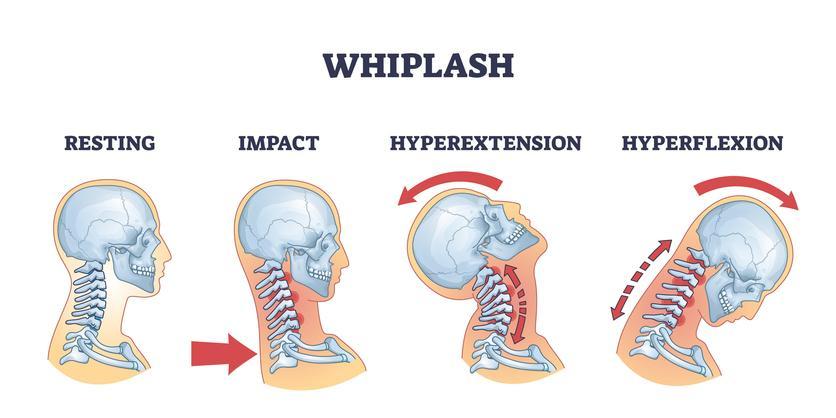
Whiplash is not simply a minor neck ache. It is a rapid acceleration-deceleration cervical spine trauma that stretches, tears, and destabilizes spinal ligaments, facet joints, and intervertebral discs.
Serving patients across Eatontown, Red Bank, Tinton Falls, and Ocean Township, our clinical team frequently sees injuries that went unnoticed initially. Here are five subtle signs of whiplash you should never ignore—and why timely medical documentation protects both your health and your rights under New Jersey auto insurance laws.
1. Cervicogenic Headaches Starting at the Base of the Skull
One of the earliest indicators of cervical trauma is a dull, throbbing ache originating at the base of the skull (suboccipital region) that radiates upward behind the eyes or temples. These are not standard tension headaches; they are cervicogenic headaches triggered when damaged upper cervical ligaments and misaligned vertebrae irritate the suboccipital and greater occipital nerves.
2. “Brain Fog,” Cognitive Fatigue, and Mild Concussion Symptoms
Whiplash involves violent motion forces transferred directly to the head. It is very common for soft-tissue cervical injuries to coexist with mild traumatic brain injury (concussion). If you find yourself struggling with light sensitivity, short-term memory lapses, dizziness, or unusual mental fatigue in the days following a collision, your cervical spine and vestibular system require detailed neurofunctional evaluation.
3. Numbness, Tingling, or Weakness Radiating into the Arms or Hands
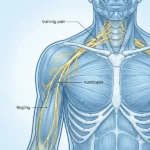
Spinal discs act as shock absorbers between cervical vertebrae. The violent hyperextension and hyperflexion of a crash can cause an acute disc bulge or herniation. When a damaged disc presses against a cervical nerve root, it produces cervical radiculopathy—pain, numbness, tingling, or weakness that travels past the shoulder into the forearm and fingers.
4. Mid-Back Tightness and Scapular Spasm
Because the neck connects structurally to the thoracic cage, whiplash forces often displace tension downward into the shoulder blades and upper back. Patients frequently dismiss this as “just sleeping wrong” or everyday muscle tightness, but it is typically protective muscle splinting caused by facet joint sprains in the lower cervical and upper dorsal spine.
5. Delayed Jaw Stiffness or Difficulty Chewing (TMJ Dysfunction)
Because the jaw forcefully snaps open and closed during sudden impact, whiplash frequently damages the temporomandibular joint (TMJ). If you notice jaw clicking, facial tenderness, or stiffness while chewing a few days after an accident, it is directly related to the crash mechanism.
Why Waiting to Get Evaluated Jeopardizes Your NJ PIP Benefits
Under New Jersey’s No-Fault PIP (Personal Injury Protection) system, your medical treatment following an auto accident is covered by your own auto insurance policy regardless of who caused the collision.
However, NJ PIP operates under strict administrative and clinical documentation rules:
- The “Gap in Treatment” Defense: If you wait 3 to 4 weeks before seeing a doctor, insurance adjusters frequently argue that your pain was caused by something else in daily life rather than the collision. Establishing an early, objective medical baseline connects your injury directly to the crash date.
- Pre-Certification Protocols: Comprehensive care—such as on-site digital X-rays, MRI referrals, targeted physical therapy, and spinal rehabilitation—must be clinically documented, staged, and submitted through standard PIP pre-certification windows.
- Objective Biomechanical Proof: At Eatontown Elite Care Center, we provide rigorous clinical staging and documentation to ensure your care is authorized and your recovery is seamless.
Comprehensive Auto Injury Care in Monmouth County
Recovering from whiplash requires an integrated, evidence-based approach. Combining gentle instrument-based chiropractic adjustments, hands-on one-on-one physical therapy, and digital diagnostics allows us to stabilize spinal ligaments, restore cervical lordosis, and eliminate chronic pain before scar tissue hardens.
In an auto accident? Don’t wait for hidden symptoms to worsen.
Call Kim or Marianny at our Eatontown office at (732) 389-2800 to schedule your initial post-accident clinical evaluation and insurance verification.
- Office: Eatontown Elite Care Center
- Address: 117 NJ-35 #2, Eatontown, NJ 07724
- Web: https://spinenj.com/