
Home / Whiplash
Written and Reviewed by Dr. Jordan Kovacs
NJ Licensed Chiropractor | Fellowship-Trained in Primary Spine Care & Auto Accident Injuries
NJ Licensed Chiropractor | Fellowship-Trained in Primary Spine Care & Auto Accident Injuries
What is Whiplash?
Whiplash is a neck injury caused by rapid back-and-forth movement of the head, similar to the cracking of a whip. This sudden force stretches and tears the muscles, ligaments, and tendons in your neck, leading to significant pain and restricted mobility. While whiplash most commonly occurs during rear-end car accidents, it can also result from sports collisions, physical abuse, or other traumatic impacts.
The injury affects the soft tissues of the cervical spine (neck region), and symptoms may not appear immediately after the trauma. Many patients don’t realize they have whiplash until hours or even days after their accident, which is why immediate evaluation by a fellowship-trained specialist is critical for proper diagnosis and treatment.
Common Whiplash Symptoms
Whiplash symptoms can vary significantly from patient to patient, ranging from mild discomfort to severe, debilitating pain. Understanding these symptoms helps ensure you seek appropriate care quickly:
Immediate Symptoms (Within 24 Hours)
- Neck pain and stiffness: Often the first noticeable symptom, typically worsening with movement
- Loss of range of motion: Difficulty turning your head side to side or looking up and down
- Headaches: Usually starting at the base of the skull and radiating upward
- Tenderness in shoulders, upper back, or arms: Muscle tension spreading from the neck region
Delayed Symptoms (Within Days or Weeks)
- Dizziness and vertigo: Balance problems or feeling lightheaded
- Fatigue and sleep disturbances: Difficulty falling asleep or staying asleep due to pain
- Tingling or numbness: Sensations radiating into the arms or hands
- Cognitive difficulties: Problems with memory, concentration, or mental clarity (sometimes called “brain fog”)
- Irritability and mood changes: Emotional changes related to pain and injury stress
- Ringing in the ears (tinnitus): Persistent buzzing or ringing sounds
- Blurred vision: Visual disturbances or difficulty focusing
Important: If you experience severe neck pain, numbness or weakness in your arms or legs, difficulty walking, or loss of bladder or bowel control, seek emergency medical attention immediately. These may indicate serious spinal cord damage requiring urgent care.
Understanding Whiplash: The Biomechanics of Cervical Injury
Whiplash injuries occur in a fraction of a second, but understanding the biomechanical forces involved helps patients recognize why symptoms develop and why early intervention is critical. The following illustration shows the four distinct phases of cervical spine trauma during a typical rear-end collision, occurring within just 300 milliseconds of impact.
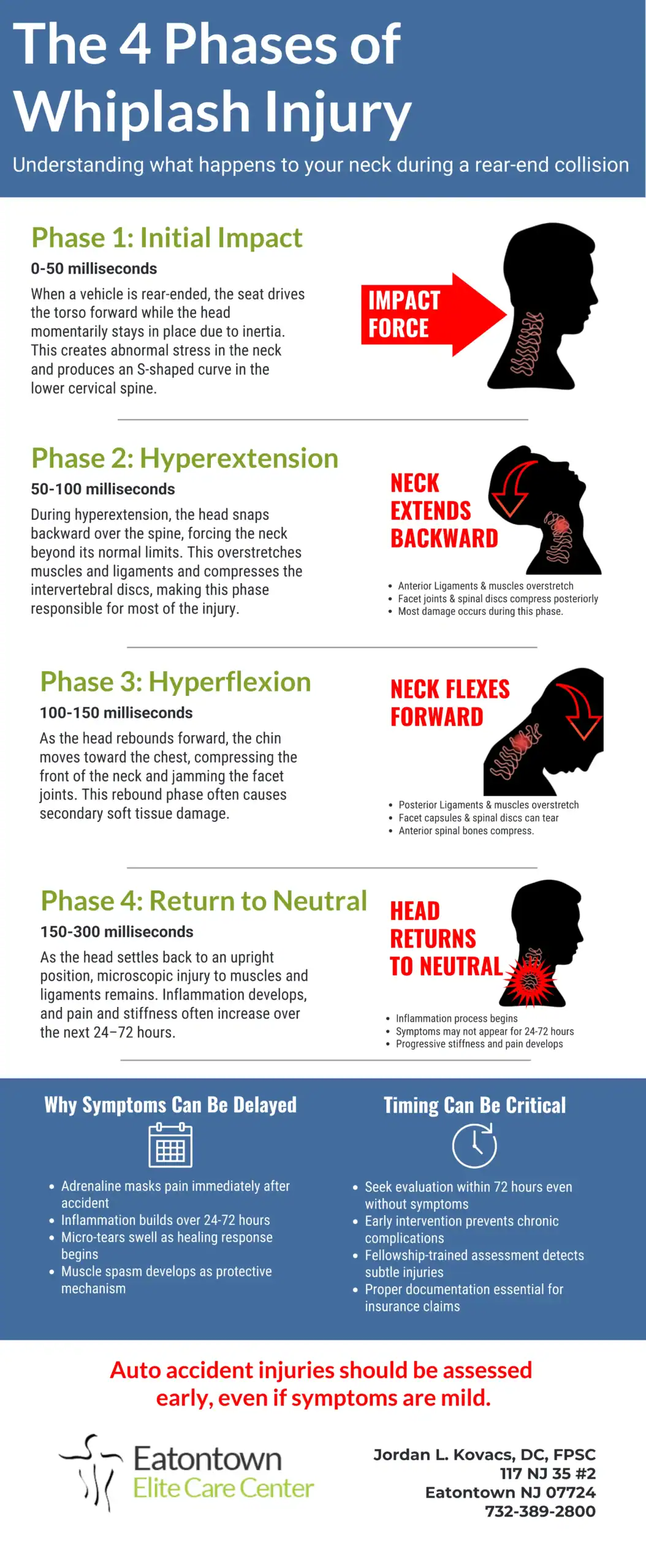
This rapid sequence of hyperextension and hyperflexion creates microscopic tears in muscles, ligaments, and soft tissues throughout the cervical spine. Because symptoms often don’t appear for 24-72 hours due to adrenaline and delayed inflammation, many patients mistakenly believe they’re uninjured. Dr. Kovacs’s fellowship training in Primary Spine Care includes advanced biomechanics education, enabling precise diagnosis and treatment of even subtle whiplash injuries that general practitioners might overlook.
What Causes Whiplash?
While auto accidents are the most common cause of whiplash, understanding all potential causes helps with prevention and early recognition:
Motor Vehicle Accidents
Rear-end collisions are the leading cause of whiplash injuries. Even low-speed accidents (under 15 mph) can generate enough force to cause significant neck trauma. The unexpected nature of rear-end impacts means your neck muscles aren’t braced for the sudden movement, increasing injury severity. Side-impact and front-end collisions can also cause whiplash, though the mechanism of injury differs slightly.
Sports Injuries
Contact sports like football, hockey, rugby, and boxing frequently result in whiplash due to tackles, collisions, or direct blows to the head. Even non-contact activities like gymnastics or diving can cause whiplash if you land incorrectly or experience sudden head movement.
Physical Assault
Being shaken, struck, or experiencing any form of physical trauma that causes rapid head movement can result in whiplash. This includes situations of domestic violence or assault.
Amusement Park Rides
Roller coasters and other high-speed rides that involve sudden stops, sharp turns, or rapid acceleration can cause whiplash, particularly in older riders or those with pre-existing neck conditions.
Falls and Slip Accidents
Falling and striking your head, or experiencing a sudden jerking motion during a slip, can generate the whipping motion that causes whiplash injuries.
Expert Whiplash Treatment Options
At Eatontown Elite Care Center, we provide comprehensive, evidence-based treatment for whiplash that addresses both immediate pain relief and long-term healing. Dr. Kovacs’ fellowship training in auto accident injuries ensures you receive specialized care tailored to your specific injury pattern.
Chiropractic Care for Whiplash
Our specialized chiropractic care focuses on restoring proper cervical spine alignment and reducing nerve irritation. Dr. Kovacs uses gentle, precise adjustments specifically designed for whiplash injuries, avoiding aggressive manipulation that could worsen your condition. Chiropractic treatment helps reduce inflammation, restore range of motion, and accelerate natural healing processes.
Physical Therapy Rehabilitation
Our comprehensive physical therapy programs include targeted exercises to strengthen neck muscles, improve flexibility, and restore normal movement patterns. We utilize modalities such as therapeutic ultrasound, electrical stimulation, and heat/ice therapy to manage pain and promote healing. Your customized rehabilitation plan progresses at your pace, ensuring safe recovery without setbacks.
Auto Accident Injury Protocols
As a fellowship-trained specialist in auto accident injuries, Dr. Kovacs provides specialized auto injury treatment that follows evidence-based protocols specifically designed for whiplash recovery. This includes comprehensive documentation for insurance purposes, coordinated care with other medical providers when necessary, and treatment plans that address both visible injuries and potential complications.
Soft Tissue Therapy
Manual therapy techniques including massage, myofascial release, and trigger point therapy help reduce muscle tension, improve circulation, and break up scar tissue that can develop after whiplash injuries. These techniques complement your chiropractic and physical therapy treatments for optimal results.
Postural Correction and Ergonomic Guidance
We provide specific guidance on proper posture, sleeping positions, and workplace ergonomics to support your recovery and prevent future injuries. Many whiplash patients develop poor postural habits as they compensate for pain, which can lead to chronic problems if not addressed.
Why Choose Dr. Kovacs for Whiplash Treatment?
Not all healthcare providers have specialized training in whiplash and auto accident injuries. Dr. Kovacs’ unique qualifications include:
- Fellowship Training: Advanced post-doctoral education specifically in auto accident injuries and whiplash treatment
- Diplomate Status: Board certification from the American Academy of Pain Management, demonstrating expertise in complex pain conditions
- 20+ Years Experience: Two decades of successfully treating thousands of whiplash patients
- Recognized Excellence: Named one of America’s Best Chiropractors and a Top 10 Chiropractor in New Jersey for multiple consecutive years
- Comprehensive Approach: Combined chiropractic and physical therapy services under one roof for coordinated, efficient care
- Insurance Expertise: Experienced in working with auto insurance, personal injury protection (PIP), and medical payments coverage
Learn more about Dr. Kovacs’ credentials and commitment to auto accident injury care.
The Eatontown Elite Care Center Difference
Our approach to whiplash treatment combines advanced clinical expertise with genuine compassion for your recovery journey. We understand that whiplash injuries can be frightening and disruptive to your daily life. Our team provides:
- Same-day or next-day appointments for new injuries
- Thorough initial evaluations with detailed documentation
- Clear communication about your diagnosis, treatment plan, and expected recovery timeline
- Flexible scheduling to accommodate your work and family obligations
- Direct assistance with insurance claims and documentation
- Coordination with attorneys, medical specialists, and other providers when needed
Related Conditions We Treat
Whiplash often occurs alongside other injuries or may lead to additional complications. We also specialize in treating:
- Neck Pain – Chronic or acute cervical spine discomfort
- Herniated Disc – Spinal disc injuries that may occur during the same trauma
- Headaches – Post-traumatic headaches and cervicogenic headaches
- Back Pain – Upper and lower back injuries from auto accidents
Frequently Asked Questions About Whiplash
How long does it take to recover from whiplash?
Recovery time varies significantly based on injury severity, your age and overall health, and how quickly you begin treatment. Most patients with mild to moderate whiplash see significant improvement within 6-12 weeks with proper treatment. However, approximately 15-20% of whiplash patients may experience symptoms lasting six months or longer, particularly if treatment is delayed. Early intervention with a fellowship-trained specialist like Dr. Kovacs significantly improves your chances of complete recovery and reduces the risk of developing chronic pain.
Should I go to the emergency room or see a chiropractor for whiplash?
If you’ve been in a severe accident, have visible injuries, experience severe pain, or have any neurological symptoms (numbness, weakness, difficulty walking, bowel/bladder problems), go to the emergency room immediately. However, for most whiplash cases without emergency warning signs, seeing a fellowship-trained chiropractor like Dr. Kovacs is often the most effective first step. Emergency rooms primarily rule out fractures and life-threatening injuries but typically don’t provide the ongoing soft tissue treatment necessary for whiplash recovery. At Eatontown Elite Care Center, we can perform a thorough evaluation and refer you for imaging or specialist consultation if needed.
Can whiplash cause long-term problems if left untreated?
Yes, untreated whiplash can lead to several long-term complications including chronic neck pain, persistent headaches, reduced range of motion, early-onset arthritis in the cervical spine, and ongoing cognitive difficulties. Some patients develop chronic myofascial pain syndrome or fibromyalgia following untreated whiplash. The inflammation and misalignment caused by whiplash can create ongoing stress on spinal structures, leading to progressive degeneration. This is why immediate evaluation and treatment by a specialist trained in auto accident injuries is so critical. Dr. Kovacs’ fellowship training specifically addresses preventing these long-term complications through early, aggressive treatment.

Begin Your Path to Feeling Better
Or use our contact for to begin your path to feeling better
About Dr. Kovacs
Dr. Jordan Kovacs has over 20 years of experience helping patients in Eatontown and the surrounding communities feel better, move better, and live healthier. He combines gentle, patient-centered chiropractic care with a strong clinical background to help individuals of all ages reduce pain and return to the activities they enjoy. Learn more about Dr. Kovacs.
Serving Eatontown & the Monmouth County Area
We proudly care for patients from Eatontown, Oakhurst, Long Branch, Oceanport, Tinton Falls, Shrewsbury, Red Bank, Neptune, and surrounding communities.
Other Conditions We Treat
Ready to Experience Award-Winning Care?


Dr. Jordan Kovacs – America’s Best Chiropractor 4 Consecutive Years (2022-2025)
Join hundreds of patients who trust Eatontown’s top-rated chiropractor for relief from pain, auto accident injuries, and chronic conditions.
Schedule Your Appointment with Eatontown Elite Care Center
Call (732) 389-2800 or Click the Button Below to Request an Appointment Online:
Schedule Appointment
✓ Most insurance accepted ✓ No referral needed ✓ Same-day appointments available