

Home / Herniated Disc
Written and Reviewed by Dr. Jordan Kovacs
NJ Licensed Chiropractor | Fellowship-Trained in Primary Spine Care & Auto Accident Injuries
NJ Licensed Chiropractor | Fellowship-Trained in Primary Spine Care & Auto Accident Injuries
Herniated disc injuries can cause debilitating pain that radiates throughout your body, but surgery isn’t always the answer. At Eatontown Elite Care Center, Dr. Jordan Kovacs provides expert non-surgical treatment for herniated discs, serving patients throughout Monmouth County including Eatontown, Oceanport, Shrewsbury, Long Branch, Deal, West Long Branch, Oakhurst, and Tinton Falls. With fellowship training in auto accident injuries, board certification as a Diplomate of the American Academy of Pain Management, and recognition as one of America’s Best Chiropractors, Dr. Kovacs offers comprehensive care that addresses the root cause of your disc injury and promotes natural healing.
What Is a Herniated Disc?
A herniated disc, also called a slipped disc or ruptured disc, occurs when the soft, gel-like center of a spinal disc pushes through a tear in the tougher outer layer. Your spine contains 23 intervertebral discs that act as cushions between the vertebrae, absorbing shock and allowing flexibility. Each disc has a tough outer ring (annulus fibrosus) and a soft inner core (nucleus pulposus).
When the outer ring weakens or tears, the inner material can bulge out and press against nearby spinal nerves. This compression causes pain, numbness, tingling, and weakness that can radiate far from the actual injury site. Herniated discs most commonly occur in the lower back (lumbar spine) and neck (cervical spine), though they can develop anywhere along the spine.
Unlike a bulging disc where the outer layer remains intact but protrudes outward, a herniated disc involves an actual rupture of the disc’s outer wall. This distinction is important because herniated discs typically cause more severe symptoms and require specialized treatment approaches.
Common Herniated Disc Symptoms
Herniated disc symptoms vary significantly depending on the location of the disc and which nerves are affected. Some patients experience mild discomfort, while others suffer severe, life-disrupting pain. Understanding these symptoms helps ensure proper diagnosis and treatment:
Lumbar Herniated Disc Symptoms (Lower Back)
- Sciatica: Sharp, shooting pain that travels from your lower back through your buttock and down one leg, often reaching the foot
- Lower back pain: Localized pain in the lumbar region that worsens with sitting, bending, or lifting
- Leg numbness or tingling: Pins-and-needles sensations or numbness in one or both legs, often following the path of the sciatic nerve
- Muscle weakness: Difficulty standing on tiptoes, lifting your foot, or performing movements that require leg strength
- Pain with specific movements: Increased discomfort when coughing, sneezing, or straining
- Foot drop: In severe cases, inability to lift the front part of your foot when walking
Cervical Herniated Disc Symptoms (Neck)
- Neck pain: Deep, aching pain in the neck that may worsen with certain head positions
- Radiating arm pain: Sharp pain that travels from your neck through your shoulder and down your arm, sometimes reaching specific fingers
- Arm numbness or tingling: Sensations of “pins and needles” in your shoulder, arm, hand, or specific fingers
- Muscle weakness in arms or hands: Difficulty gripping objects, reduced hand strength, or trouble performing fine motor tasks
- Headaches: Pain radiating from the base of your skull upward, particularly cervicogenic headaches
Warning Signs Requiring Immediate Medical Attention
Seek emergency care immediately if you experience:
- Loss of bladder or bowel control (cauda equina syndrome)
- Progressive leg weakness or numbness
- Saddle anesthesia (numbness in the inner thighs and genital area)
- Difficulty walking or maintaining balance
These symptoms may indicate severe nerve compression requiring urgent intervention.
What Causes Herniated Discs?
Herniated discs result from various factors, ranging from acute trauma to gradual degeneration. Understanding the cause helps guide appropriate treatment:
Disc Degeneration
As we age, spinal discs naturally lose water content and become less flexible. This process, called disc degeneration, makes the outer disc wall more prone to tearing even with minor stress. While degeneration is a natural part of aging, certain lifestyle factors accelerate the process, including smoking, poor posture, sedentary lifestyle, and inadequate nutrition.
Traumatic Injury
Sudden trauma can cause immediate disc herniation. Common traumatic causes include auto accidents (especially rear-end collisions), falls from height, lifting heavy objects with improper form, sudden twisting movements under load, and sports injuries involving contact or awkward landings. Dr. Kovacs’ fellowship training in auto accident injuries makes him particularly qualified to treat disc herniations resulting from vehicle collisions.
Repetitive Stress
Repeated movements that stress the spine can gradually weaken disc walls over time. Occupations requiring frequent bending, twisting, or heavy lifting significantly increase herniation risk. Jobs involving prolonged sitting (especially with poor posture) or repetitive vibration (such as truck driving or operating heavy machinery) also contribute to disc injury.
Genetic Predisposition
Some people inherit a tendency toward disc problems, including weaker disc walls or premature degeneration. If multiple family members have experienced herniated discs, you may have increased risk and should take preventive measures.
Excess Body Weight
Carrying extra weight increases the load on your lumbar spine discs, accelerating degeneration and raising herniation risk. The additional stress is particularly problematic for the L4-L5 and L5-S1 discs in the lower back, the most common sites for herniation.
Expert Herniated Disc Treatment Options
At Eatontown Elite Care Center, we provide comprehensive, evidence-based treatment for herniated discs that focuses on natural healing and pain relief without surgery. Dr. Kovacs’ advanced training ensures you receive specialized care tailored to your specific disc injury and symptoms.
Specialized Chiropractic Care
Our gentle chiropractic adjustments focus on reducing nerve pressure and improving spinal alignment to facilitate natural healing. Unlike aggressive manipulation that could worsen disc injuries, Dr. Kovacs uses precise, controlled techniques specifically designed for herniated disc patients. Flexion-distraction technique gently stretches the spine to create negative pressure within the disc, encouraging retraction of herniated material. Cox Technic decompression therapy reduces disc pressure while increasing nutrient exchange for healing. These approaches help restore proper spinal mechanics and reduce inflammation without the risks associated with surgery.
Physical Therapy and Rehabilitation
Our comprehensive physical therapy programs include core strengthening exercises to stabilize your spine and reduce disc stress, flexibility training to improve range of motion without aggravating the injury, postural correction to eliminate harmful movement patterns, and progressive resistance training to build supporting musculature. We incorporate therapeutic modalities including electrical stimulation to reduce pain and muscle spasms, ultrasound therapy to promote deep tissue healing, and heat/ice therapy to manage inflammation. Your customized rehabilitation plan strengthens the muscles supporting your spine, reducing the likelihood of future disc problems.
Spinal Decompression Therapy
Non-surgical spinal decompression uses controlled traction to gently stretch the spine, creating negative pressure within the disc. This negative pressure can help draw herniated material back toward the center of the disc while promoting nutrient-rich fluid exchange that accelerates healing. Many patients experience significant pain relief and improved mobility through this advanced therapy.
Auto Accident Injury Treatment
Disc herniations frequently result from auto accidents. As a fellowship-trained specialist in auto accident injuries, Dr. Kovacs provides specialized treatment protocols for trauma-related disc injuries. This includes thorough documentation for insurance purposes, coordinated care with medical specialists when needed, and treatment plans addressing both the disc injury and associated soft tissue damage common in vehicle collisions.
Pain Management and Inflammation Control
We employ various techniques to manage pain and reduce inflammation around the herniated disc, including manual therapy to release muscle tension and improve circulation, trigger point therapy to address referred pain patterns, and nutritional guidance supporting natural anti-inflammatory processes. Our goal is to reduce your reliance on pain medications while addressing the underlying cause of your symptoms.
Understanding Your Spine: Anatomy and Common Injury Locations
The human spine is a remarkable structure consisting of 33 vertebrae divided into four distinct regions, each with unique functions and injury patterns. Understanding which region is affected by your injury helps Dr. Kovacs develop the most effective treatment approach for your specific condition.
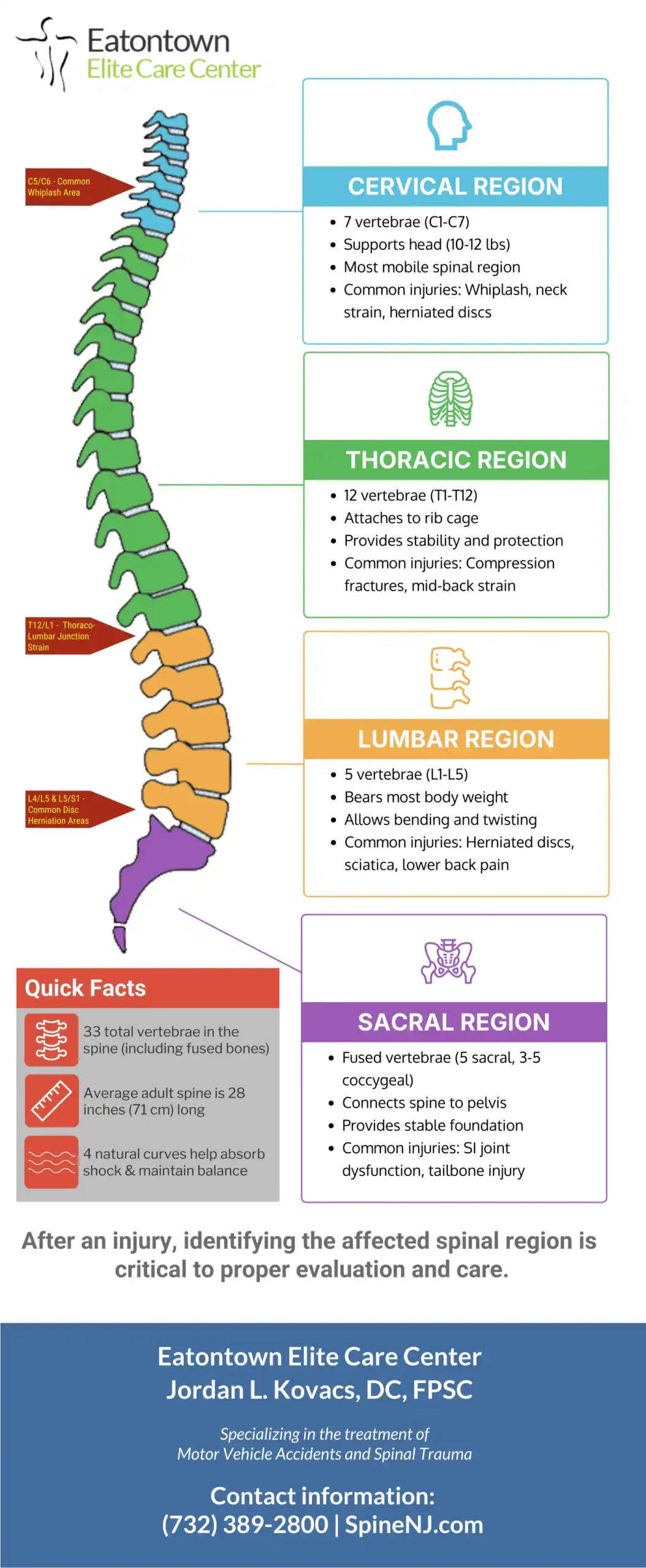
After an auto accident or injury, identifying the affected spinal region is critical to proper evaluation and care. Dr. Kovacs’s fellowship training includes advanced spinal diagnostics and MRI interpretation, allowing him to precisely identify injury location and severity. Whether you’re experiencing cervical whiplash, thoracic compression, lumbar disc herniation, or sacroiliac dysfunction, accurate diagnosis determines the most appropriate treatment pathway.
Why Choose Dr. Kovacs for Herniated Disc Treatment?
Not all healthcare providers have specialized training in complex spinal conditions like herniated discs. Dr. Kovacs offers unique qualifications:
- Fellowship Training: Advanced post-doctoral education in auto accident injuries, including traumatic disc herniations
- Board Certification: Diplomate of the American Academy of Pain Management, demonstrating expertise in managing chronic and acute pain conditions
- 20+ Years Experience: Two decades of successfully treating herniated disc patients with non-surgical approaches
- National Recognition: Named one of America’s Best Chiropractors and a Top 10 Chiropractor in New Jersey for multiple consecutive years
- Comprehensive Approach: Combined chiropractic and physical therapy services under one roof for coordinated, efficient care
- Patient-Centered Care: Treatment plans customized to your specific disc location, severity, and lifestyle needs
Learn more about Dr. Kovacs’ credentials and commitment to non-surgical spinal care.
The Eatontown Elite Care Center Difference
Living with a herniated disc can feel overwhelming and frightening, especially when surgery is recommended. Our approach provides hope through proven non-surgical treatment options. We offer:
- Thorough initial evaluations with advanced diagnostic assessment
- Clear explanations of your condition, treatment options, and expected outcomes
- Conservative, non-invasive treatment as first-line therapy
- Flexible scheduling to accommodate your recovery needs
- Direct communication with your other healthcare providers
- Insurance expertise, including personal injury and auto accident coverage
- Ongoing support and education throughout your healing journey
Related Conditions We Treat
Herniated discs often occur alongside other spinal conditions or produce symptoms that affect other areas. We also specialize in treating:
Frequently Asked Questions About Herniated Discs
Can a herniated disc heal without surgery?
Yes, most herniated discs can heal without surgery. Studies show that approximately 90% of herniated disc patients respond well to conservative treatment including chiropractic care, physical therapy, and spinal decompression. The body has remarkable healing capacity, and herniated material often shrinks over time as inflammation reduces and the disc rehydrates. However, successful non-surgical treatment requires proper care from a specialist trained in spinal conditions. Dr. Kovacs’ fellowship training and 20+ years of experience treating herniated discs have helped countless patients avoid surgery while achieving complete pain relief and restored function. Most patients see significant improvement within 6-12 weeks, though severe herniations may require longer treatment periods.
How do I know if my back pain is from a herniated disc or something else?
While only a thorough examination can definitively diagnose a herniated disc, certain symptoms suggest disc involvement. Herniated discs typically cause radiating pain that follows a specific nerve path (such as sciatica down the leg), numbness or tingling in extremities, pain that worsens with sitting or bending forward, and symptoms that are worse on one side of the body. In contrast, muscle strains usually cause localized pain without radiating symptoms, while arthritis pain is often bilateral and worsens with activity throughout the day. At Eatontown Elite Care Center, Dr. Kovacs performs comprehensive evaluations including orthopedic and neurological testing to accurately diagnose your condition. We can order MRI imaging when necessary to confirm disc herniation and guide treatment planning.
What activities should I avoid with a herniated disc?
During the acute phase of a herniated disc injury, avoid activities that increase disc pressure or aggravate nerve compression. This includes heavy lifting (especially with twisting motions), prolonged sitting (particularly on soft surfaces without lumbar support), high-impact exercises like running or jumping, forward bending at the waist, and contact sports. However, complete bed rest is not recommended as it can lead to muscle weakness and stiffness. Instead, focus on gentle walking, supported standing activities, and therapeutic exercises prescribed by Dr. Kovacs. As your condition improves, we progressively reintroduce activities based on your healing progress. Our physical therapy program teaches proper body mechanics and movement patterns that protect your spine during daily activities, reducing the risk of re-injury once you’ve healed.

Begin Your Path to Feeling Better
Or use our contact for to begin your path to feeling better
About Dr. Kovacs
Dr. Jordan Kovacs has over 20 years of experience helping patients in Eatontown and the surrounding communities feel better, move better, and live healthier. He combines gentle, patient-centered chiropractic care with a strong clinical background to help individuals of all ages reduce pain and return to the activities they enjoy. Learn more about Dr. Kovacs.
Serving Eatontown & the Monmouth County Area
We proudly care for patients from Eatontown, Oakhurst, Long Branch, Oceanport, Tinton Falls, Shrewsbury, Red Bank, Neptune, and surrounding communities.
Other Conditions We Treat




Ready to Experience Award-Winning Care?


Dr. Jordan Kovacs – America’s Best Chiropractor 4 Consecutive Years (2022-2025)
Join hundreds of patients who trust Eatontown’s top-rated chiropractor for relief from pain, auto accident injuries, and chronic conditions.
Schedule Your Appointment with Eatontown Elite Care Center
Call (732) 389-2800 or Click the Button Below to Request an Appointment Online:
Schedule Appointment
✓ Most insurance accepted ✓ No referral needed ✓ Same-day appointments available